Ace is First Tee’s rigorous capstone program, which helps teens gameplan for the future
Ponte Vedra Beach, Fla. – (Dec. 8, 2025) – First Tee is proud to announce that 14 participants have successfully completed the Ace program, the organization’s premier achievement, which guides young people in planning their futures through hands-on projects and real-world skill development.
“Achieving Ace requires considerable time, dedication and self-reflection,” said Ryan Graff, vice president of programs at First Tee. “These teens have demonstrated an incredible commitment to personal growth, and we are proud of their achievements and excited to see where their futures take them.”
The 2025 Ace achievers represent seven First Tee chapters across the country:
Will Berthiaume, First Tee – Connecticut
Abelina Wakeland, First Tee – Florida Gold Coast
Annika Collado, First Tee – Florida Gold Coast
Elise Rivas-Mucklow, First Tee – Florida Gold Coast*
Jenna Misset, First Tee – Florida Gold Coast
Colby Townsend, First Tee – Greater Charlotte
Colin Watson, First Tee – Greater Dallas
Daniel Ferguson, First Tee – Greater Dallas
Jacob Lewallen, First Tee – Greater Dallas*
Aarya Shewale, First Tee – Greater Houston*
Arden Han-Wei, First Tee – Greater Sacramento*
Hannah Stouder, First Tee – Greater Sacramento*
Evan Santoso, First Tee – Silicon Valley
Tristan Hipolito, First Tee – Silicon Valley*
*Indicates Make Your Mark grant recipient
Through the Ace program, participants explore their interests and potential career paths, while creating actionable goals. To achieve Ace, participants must complete four comprehensive projects focusing on golf, education, career and community service.
Based on their community service projects, participants can earn grants for their local chapters to expand their impact. In 2025, six Ace participants secured Make Your Mark grants totaling $41,000 for initiatives addressing critical needs in their communities. These grants allow Ace participants to leave a legacy at their chapter and inspire future participants to do the same.
First Tee – Greater Sacramento received $10,000 in recognition of Hannah Stouder’s “Hannah’s Care Closet,” which provides free essential items to elementary school students in need. First Tee – Greater Houston received $10,000 in recognition of Aarya Shewale’s “Katy Chess Academy,” which helps kids develop life skills through chess instruction.
For more information about the Ace program and how to get involved, visit firsttee.org/ace.
Jacob has been a First Tee – Sandhills participant since 2021, attending programs at Pinewild and building a deep love for the game. From day one, he brought curiosity, energy, and a genuine excitement to learn. Whether he’s working on his full swing or tackling a new challenge on the course, Jacob shows up ready to grow, and always with a smile.
Finding Confidence and Connection
One of the things Jacob loves most about First Tee is the connection he feels with his coaches and peers. He thrives in an environment where encouragement, support, and recognition are part of the culture. His positive attitude and sincere interactions remind us each week why meaningful relationships matter just as much as golf skills. Every Wednesday at Pinewild, Jacob’s enthusiasm sets the tone. He’s the kind of participant who lifts others up simply by being himself.
A Simple Hello That Sparked Something Special
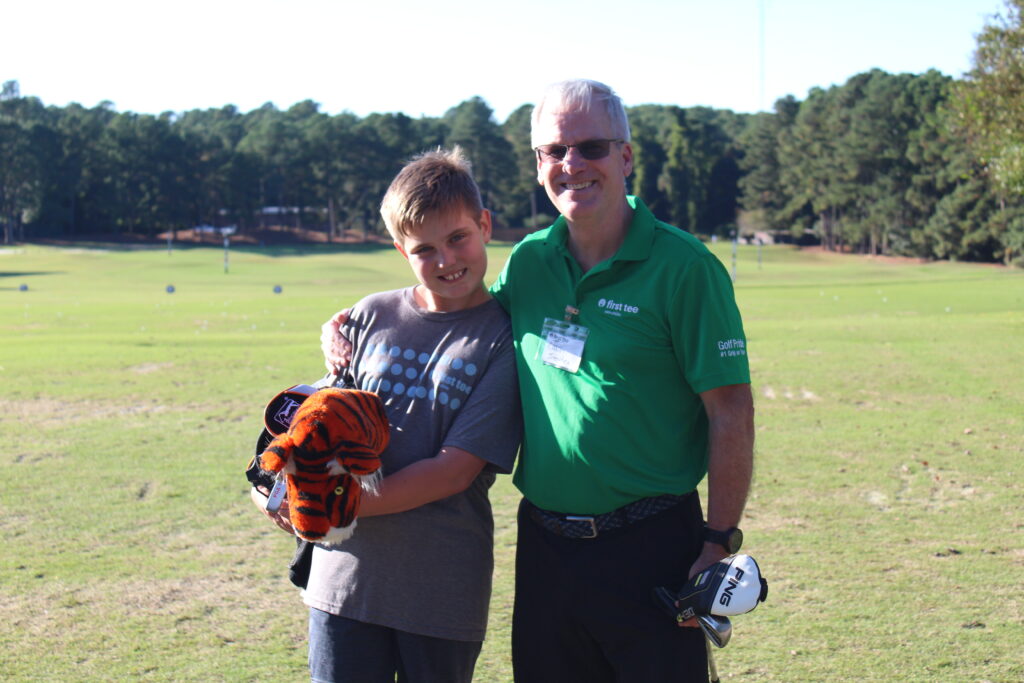
A few weeks ago, during his full swing station, Jacob noticed a gentleman walking by with his golf bag. Without hesitation, Jacob offered one of his characteristic warm greetings: “Hi, how are you doing today?” The gentleman smiled and responded. Jacob then added a polite, thoughtful compliment about his Tiger Woods driver cover, a small detail that many might overlook, but Jacob noticed immediately. Moments later, the gentleman, Michael, approached quietly and asked, “Would it be alright if I gave Jacob my club head cover?” It wasn’t just any cover; it was the iconic Tiger Woods tiger head cover.
An Unexpected Gift of Kindness
With Jacob’s dad giving his blessing, we introduced the two. Jacob shook Michael’s hand and introduced himself with his usual sincerity and grace. When Michael offered him the head cover, Jacob hesitated, surprised and humbled before accepting: “Thank you very much, that’s very kind!” The two walked together to test the cover on Jacob’s driver, and it fit perfectly. Jacob even asked, with his thoughtful charm, if they could “trade covers,” and Michael happily agreed. What began as a simple exchange turned into a genuine moment of connection between two golfers from different generations.
A Lasting Impact
The following week, Jacob spotted Michael walking by again. Before Michael could say a word, Jacob called out with excitement: “Hi Mr. Michael! Thank you again for the club cover, I named him Jackson, and he’s helping my swing!” In true Jacob fashion, he had given the tiger cover a name and a purpose, proudly incorporating it into his golf routine.
More Than Golf: The Heart of Our Mission
Moments like these are why First Tee exists. What happened between Jacob and Michael wasn’t planned, structured, or part of a lesson plan. It was pure, authentic connection, sparked by kindness, curiosity, and the character-building opportunities that come naturally when young people are supported on and off the course. Jacob continues to inspire everyone around him, his coaches, his peers, and now, even golfers who just happen to be walking by. And that’s the beauty of First Tee – Sandhills. Golf does bring us together, but it’s the relationships, lessons, and little moments that leave a lasting impact forever!
At First Tee, creating safe, supportive environments where young people can thrive is fundamental to everything we do. That’s why we follow the guidelines established by the U.S. Center for SafeSport, a critical framework that helps us protect the participants we serve.
The U.S. Center for SafeSport is a nonprofit organization dedicated to ending all forms of abuse in sport. Its comprehensive approach includes:
Education for coaches, volunteers and administrators
Policies that define misconduct and establish reporting procedures
A centralized reporting system for investigating allegations of misconduct
The organization’s mission is straightforward: ensure that sports remain an enriching experience free from abuse and misconduct. While golf might look different from competitive team sports, the principles of SafeSport align with our mission of building character and life skills in young people.
We mandate background checks and SafeSport training for all First Tee coaches and staff because:
Protecting participants comes first. Young people deserve to learn and grow in environments where they feel safe, respected and valued. SafeSport training equips our staff and volunteers with the knowledge to create safe spaces and respond appropriately if concerns arise.
Prevention is our top priority. SafeSport’s emphasis on education helps our entire First Tee network understand what constitutes misconduct, recognize warning signs and know the proper steps for reporting concerns. This proactive approach is far more effective than reactive measures alone.
SafeSport helps us build trust with families.Through research in collaboration with The Harris Poll, we know parents show a strong preference for coaches who are trained background checked. Following SafeSport guidelines demonstrates our serious commitment to that responsibility and provides families with confidence that we’re taking every reasonable measure to keep young people safe.
We’re not just checking a box; we’re making an ongoing commitment that includes regular training and continuous improvement of our safety practices. By following SafeSport guidelines, we’re ensuring that every young person who walks into a First Tee Chapter can focus on what matters most: developing their skills and discovering their potential.
By Kristin Westberg – Senior Director, Training & Evaluation
At First Tee, we’re committed to helping all young people build character, confidence and life skills through golf. That includes participants with diverse learning needs — some of whom may have an Individualized Education Program (IEP) or 504 Plan.
These plans are designed to help students succeed in school, but they can also provide valuable insights for our coaches and volunteers. With participants back in school, now is a perfect time to discuss with your chapter how it can meet your child’s needs. By working closely with families, we can create a more inclusive, supportive and empowering experience for every participant.
Why parent partnerships matter
Parents and caregivers are the best source of knowledge about their child’s strengths, challenges and what helps them thrive. When we build trust and open lines of communication, we can better understand how to support each participant in a way that’s respectful, personalized and effective.
What to share during the intake process
You don’t need to provide chapters with the full IEP or 504 Plan — just the essentials that will help them provide a great experience. Here are a few questions to consider:
Does your child have an IEP or 504 Plan?
Are there specific accommodations or strategies that work well for them?
Are there any triggers or challenges we should be aware of?
What are your child’s strengths and interests?
What helps your child feel safe, confident and included?
This information can be summarized into a simple “Participant Snapshot” for coaches to reference, helping them tailor instruction and interactions in a meaningful way.
Program adaptations that make a big impact
Here are a few adaptations our chapters have made that can help participants with IEPs or 504 Plans thrive:
Visual schedules: They may use boards or laminated sheets to show the day’s activities in order.
Instructional cue cards: They may provide visual prompts for golf skills or life skills as reminders.
Color-coded zones: They often use cones or other items to mark areas and support transitions.
Behavior supports: They may offer “break cards” or “feelings charts” to help participants communicate their needs.
These tools support not only students with learning differences but also help all participants feel more confident and engaged.
The Power of Listening and Learning
By listening to families, being flexible and showing a willingness to adapt and learn, First Tee Chapters can create spaces where all kids feel valued and supported.
Accenture, a global professional services company and First Tee Trustee, hosts a personal development session for staff members at its Atlanta office on the first Friday of each month. Stuart Furlow had no idea one of these workshops would lead to one of the most rewarding experiences of his professional life. While working as a manufacturing and operations consultant, Stuart was also looking for a way to give back, and First Tee – Metro Atlanta provided the perfect opportunity.
Growing up, Stuart learned golf from his father, uncle and cousin. The game had been a part of his life, but he’d never considered becoming a coach. “It was perfect timing,” Stuart said about discovering First Tee. “I just finished a project and heard about the volunteer opportunity. I wanted to be a mentor. I wanted to teach the game of golf and learn about First Tee.” Little did Stuart know, he would create a meaningful relationship with a participant named Ethan, helping to shape his bright future ahead.
A mentorship built on more than golf
Ethan Herndon didn’t take up golf by choice. When his dad first brought him to First Tee – Metro Atlanta at 8 years old, he went “begrudgingly,” following in his older sister’s footsteps. But that day changed everything. While golf can be portrayed as a sport for older and wealthier people, “First Tee is the opposite of that – it’s for everybody,” he said.
For the next decade, Ethan returned to John A. White Golf Course every Saturday. By the time Stuart joined First Tee as a coach three years ago, Ethan was a high school freshman starting to think seriously about his future.
Stuart immediately noticed something special about Ethan. “His work ethic: He was always one of the first kids out there, starting before we even got the chance to begin our actual lesson,” Stuart said. “We started talking and learning more about each other. I learned what he was interested in, what his aspirations were, and I started to add a little bit of feedback and my own perspective.”
For Ethan, Stuart became more than just a golf coach. “He had a lot of advice that was very beneficial to me: looking at majors, programs, scholarships, things I hadn’t heard from other people before,” Ethan said. “He gave me a different outlook.”
What made Stuart’s mentorship particularly meaningful was his genuine concern for Ethan’s overall wellbeing. “While shooting low scores and hitting good shots are important, Coach Stuart always wanted to make sure we were doing good in school, mentally, physically, and that everything was going well,” Ethan said. “He was truly concerned about our wellbeing and how we were as people versus just golfers.”
The power of partnership
Stuart’s commitment to First Tee reflects Accenture’s broader values. “The partnership between Accenture and First Tee is something that Accenture takes great pride in,” Stuart said. “We continuously talk about making an impact in the communities we serve.”
But for Stuart, the impact goes beyond corporate social responsibility; it’s personal. Stuart sees his role as helping participants like Ethan navigate life with the benefit of his own experience.
Through the Hope Tee Shot and other programs, Accenture’s support of First Tee and its Metro Atlanta chapter extend beyond participants’ time in high school. “It doesn’t stop after you leave the program,” Stuart said. “We want to continue supporting current students and alumni through all the avenues of life.”
Today, Ethan has spent 10 years with First Tee – Metro Atlanta, transforming from a reluctant golfer into a young man with clear goals and the confidence to pursue them. Stuart’s mentorship played a crucial role in that journey, not just teaching him about golf, but helping him understand the possibilities ahead.
Their story demonstrates the true mission of First Tee: using golf as a vehicle to build character and teach life skills that extend far beyond the course. And for volunteers like Stuart, it’s proof that giving back can be one of the most rewarding experiences of all.
Learn more about how you can support young people like Ethan.
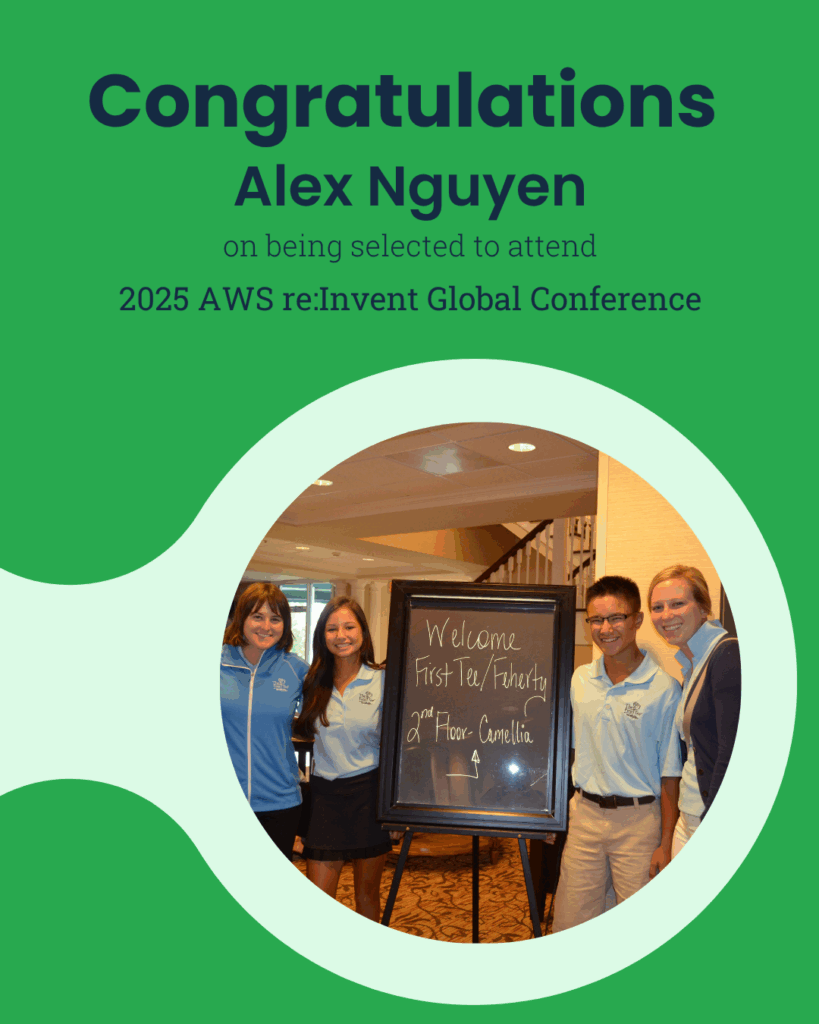
We’re beyond proud to share some incredible news from our First Tee – Sandhills family! Former participant and alumni Alex Nguyen, has been selected to attend the 2025 AWS re:Invent Global Conference in Las Vegas, Nevada, taking place November 30 through December 5.
This prestigious opportunity is part of a continued partnership between Amazon Web Services (AWS) and First Tee, now in its third year. The initiative connects outstanding First Tee alumni with hands-on professional development, leadership training, and exposure to the world of cloud technology and innovation.
Out of more than 50 applicants from across the country, only 18 alumni were selected to attend, and we’re thrilled to see Alex representing First Tee – Sandhills among this inspiring group of young leaders.
Alex first joined First Tee – Sandhills as a junior golfer and quickly stood out for his work ethic, positive attitude, and natural leadership. From perfecting his swing to mentoring younger participants, he always approached challenges with determination and heart, qualities that continue to drive his success today.
At the AWS re:Invent Global Conference, Alex will have the opportunity to network with professionals, gain hands-on experience with cutting-edge technology, and participate in workshops designed to build leadership and career readiness. It’s a once-in-a-lifetime experience that bridges the gap between the lessons learned on the course and the skills needed to thrive in the modern workforce.
We couldn’t be prouder of Alex and can’t wait to follow his journey in Las Vegas and beyond. His story is a powerful reminder that the lessons learned through golf, integrity, perseverance, and confidence, continues to make an impact long after the final putt drops.
Congratulations, Alex! The entire First Tee – Sandhills community is cheering you on every step of the way.
We will be back with an update after the event date!
Kerr and Rodas-Rhim were paired with pros Steven Alker and David Bransdon respectively
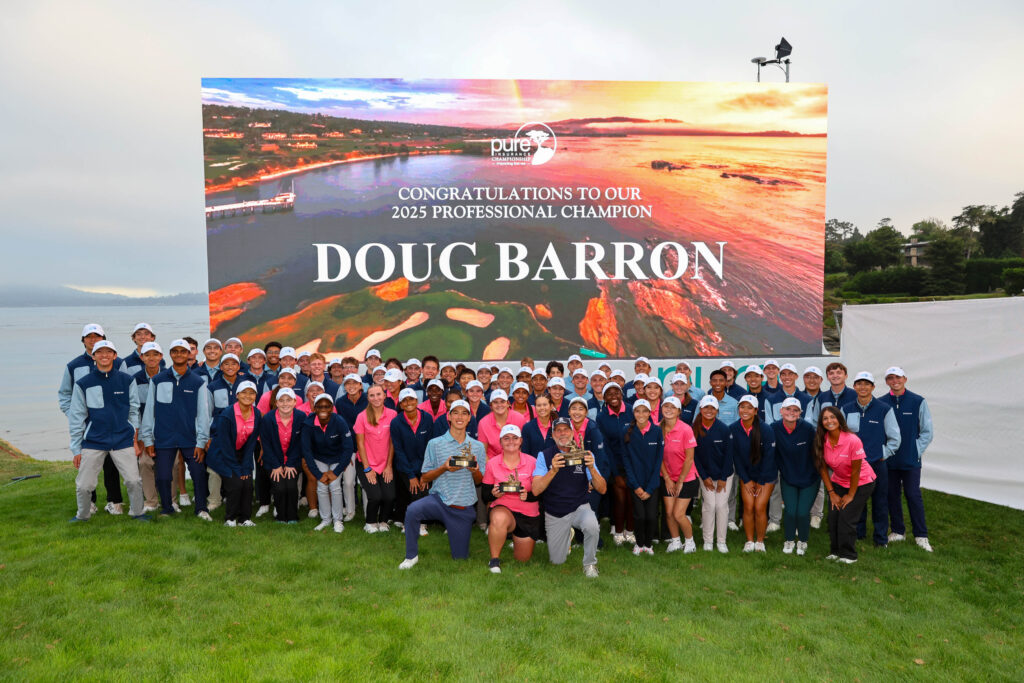
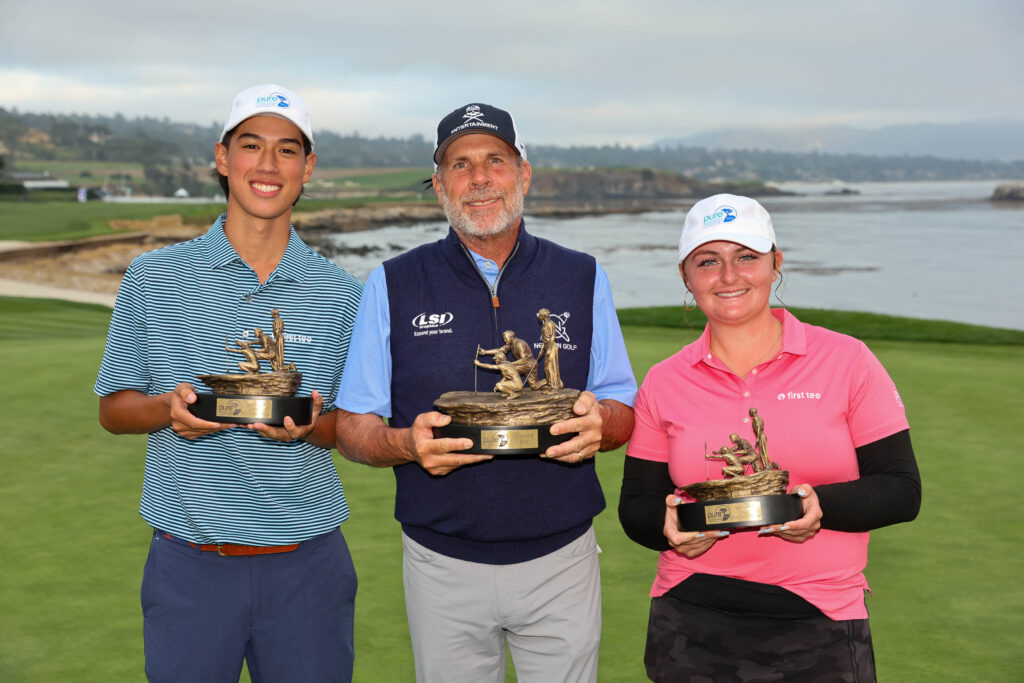
PEBBLE BEACH, Calif. (Sept. 21, 2025) – After a week of exciting competition and personal growth, Margaret Kerr of Friendswood, Texas, and Julio Rodas-Rhim of New York City are the junior winners of the 2025 PURE Insurance Championship impacting First Tee, an official PGA TOUR Champions event, which concluded Sunday at Pebble Beach.
Both Kerr and Rodas-Rhim sealed their victories Sunday with birdies on Pebble Beach’s iconic par-3 17th hole. Kerr and Alker finished 18-under to win by one stroke. Rodas-Rhim and Bransdon finished 16-under and won in a scorecard playoff.
For more than 20 years, the PURE Insurance Championship has provided First Tee participants with the unique opportunity to showcase the skills and values they’ve gained through the program. Held at the iconic Pebble Beach Golf Links and Spyglass Hill Golf Course, the tournament pairs 80 standout teens from First Tee Chapters nationwide with PGA TOUR Champions players and amateurs from the business community. The annual event was broadcast internationally on Golf Channel.
“This week, the 80 young representatives of First Tee demonstrated perseverance, personality and exceptional talent on the course,” said Greg McLaughlin, CEO of First Tee. “We extend our congratulations to Margaret and Julio on their outstanding victory. And we are sincerely grateful to PURE Insurance, Chevron, Monterey Peninsula Foundation, PGA TOUR Champions players, Golf Channel and all our generous partners for helping make this an unforgettable experience for our participants.”
First Tee – Greater Houston’s Margaret Kerr is a 16-year-old junior at Clear Springs High School, who’s been playing golf for 10 years. She referees lacrosse games, fosters dogs and completed Ace, First Tee’s capstone program designed to help teens prepare for the future.
“I don’t even think I can put it in words; life doesn’t feel real right now,” Kerr said. “I was so supported this week by not only my pro, but his caddie, his family – everybody.”
First Tee – Metropolitan New York’s Rodas-Rhim is a 17-year-old senior at Fordham Preparatory School. In addition to earning a black belt in martial arts, he has been playing golf for 13 years. He was the New York State Catholic High School Athletic Association’s 2025 individual champion, and he plans to attend college somewhere warm so he can play golf all year.
“I’m very grateful for this experience,” Rodas-Rhim said. “I really wanted to make my grandparents proud because they got me into golf in the first place, and them getting to see me on TV is probably a dream come true of mine.”
During the week, First Tee partners PURE Insurance and Chevron celebrated their commitment to First Tee’s mission and raised additional funds to support the First Tee College Scholarship Program through special events. The program pairs select First Tee alumni with a mentor and provides professional development workshops and financial assistance throughout their college experience.
This week, leaders from PURE Insurance surprised Malakai Jazayeri of First Tee – Phoenix and Ashton Washington of First Tee – Tampa Bay with invitations to become the newest members of the First Tee College Scholarship Program.
First Tee is a youth development organization that teaches life skills and helps kids and teens build their strength of character through golf. The PURE Insurance Championship is one of several national opportunities provided by First Tee headquarters to encourage and motivate participants as they progress through the program and toward higher education opportunities.
One of the most impactful aspects of the First Tee College Scholarship Program is mentorship. Each Scholar is matched with a dedicated adult to support them as they enter college and prepare for life after graduation.
First Tee Scholar Esther Etherington is a senior at Franklin College, where she’s majoring in elementary education and nonprofit leadership with plans to enter the golf industry. Last summer, Esther interned with First Tee — Greater Charleston’s Pathfinder Program and served as a USGA Pathways intern at the U.S. Open. This past summer, Esther worked at her former chapter, First Tee — Indiana, as the site director in Richmond. Her team helped to successfully launch three new community partnerships with the Boys & Girls Club, Girls Inc. and Townsend Community Center, reaching its highest number of participants since COVID-19, 160 youth.
Esther’s mentor is Hope Oaks, a Ball State University graduate. Hope is a health science systems specialist at Pfizer, Inc., and she currently serves on the board of directors for the Indiana Golf Foundation and the Indianapolis Jazz Foundation.
They shared their experience and tips on building a successful mentor-mentee relationship.
FT: Describe your experience as a Scholar mentor.
HO: I felt honored when asked to be Esther’s mentor because I had already been a witness to her leadership at First Tee when she would speak at our fundraising events while she was in high school. Her confidence, authenticity and desire to share the gifts she was given resonated with me.
FT: How did you build trust with your mentee?
HO: My experience has been that trust is built with time and keeping commitments with one another. My mentors have set a good example for me by creating a safe space to share questions, challenges, goals, disappointments, frustrations and the emotions that go with them. It’s vital to know you can 100% show up and express your true self.
FT: What is one word you’d use to describe your mentoring relationship and why?
HO: Joy. Whenever the next thing on the calendar is coming up that we have set, I know that our time together will result in a happy spirit and a positive memory. Esther inspires me and we both have similar humor.
FT: Describe a memorable moment you’ve shared with your mentee.
HO: One of my favorite moments was this summer when I spent the day observing and volunteering at Esther’s First Tee location in Richmond. Her organization and leadership skills are to be coveted. It was so much fun to see it all in action with her coaches, volunteers and students. She was truly sharing her gifts with the world. The parents were happy their kids were in the program, and you could see the kids were delighted to be there and having fun while learning. Esther is a connection and networking queen, and she built a successful program in less than six months from scratch because of her reputation and genuine relationships in her community. She connects with each child at their level: kindness, care, thoughtfulness and fun are all in her bag of superpowers. She continues to inspire me as an example and I’m grateful for the opportunity this program has afforded us.
FT: How has your mentor helped you feel more confident or prepared for life after college?
EE: Hope has helped me feel more prepared for life after college by celebrating and capitalizing on my strengths. Her perspective has provided valuable connections, advice and friendship which has made me a better and more well-rounded person.
FT: How do you feel your relationship with your mentor has changed your college experience?
EE: The relationship that I have with Hope has been a transformative part of my college experience because she is a close member on my “go to” team. Hope is always a phone call or text message away.
FT: Drawing from what you’ve observed in your peers’ mentoring relationships, what advice would you share with someone just starting out as a mentor?
EE: When you are just starting out as a mentor, it is important to remember that the mentor and mentee relationship is a two-way street. Your mentor is there for you in the highs and lows of college and beyond, so effort and transparency are important.
FT: Describe a memorable moment you’ve shared with your mentor.
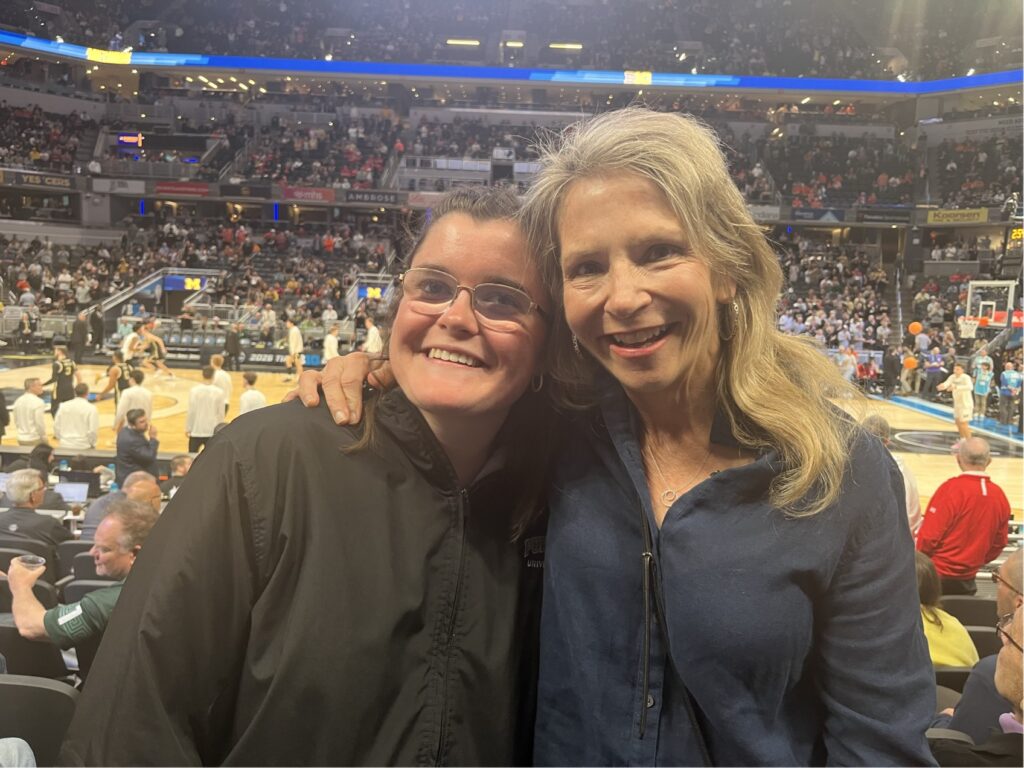
EE: We have had many memorable moments including going to a Purdue basketball game, the Indy Jazz Kitchen and lots of golf together. At the top of the list includes Hope traveling from Indianapolis when I was the site director at First Tee – Indiana in Richmond to volunteer with the kids.
Kent Hamilton is an educator based in Canton, Ohio, where he was named the state’s 2024 Elementary Physical Education Teacher of the Year. In this role, he teaches over 800 students at two schools.
Kent grew up playing golf on his family’s farm, where he would use natural features, like a tree or fence post, as hazards or targets. This creativity has continued to inform the way that he brings physical education to life in the classroom.
A few years ago, Kent began sharing videos of the creative activities his students were doing on Facebook. These videos showcase activities like bowling, basketball choreography and golf, all with the materials available in an elementary school gym. These videos have amassed millions of views, earning Kent recognition on ABC News, The Today Show and others.
“As a PE teacher, I am always trying to advocate for my programs,” Kent said. His goal with sharing these activities on social media was to give a window into his classroom and show that each day is filled with activities that are both fun and intentionally designed to promote learning.
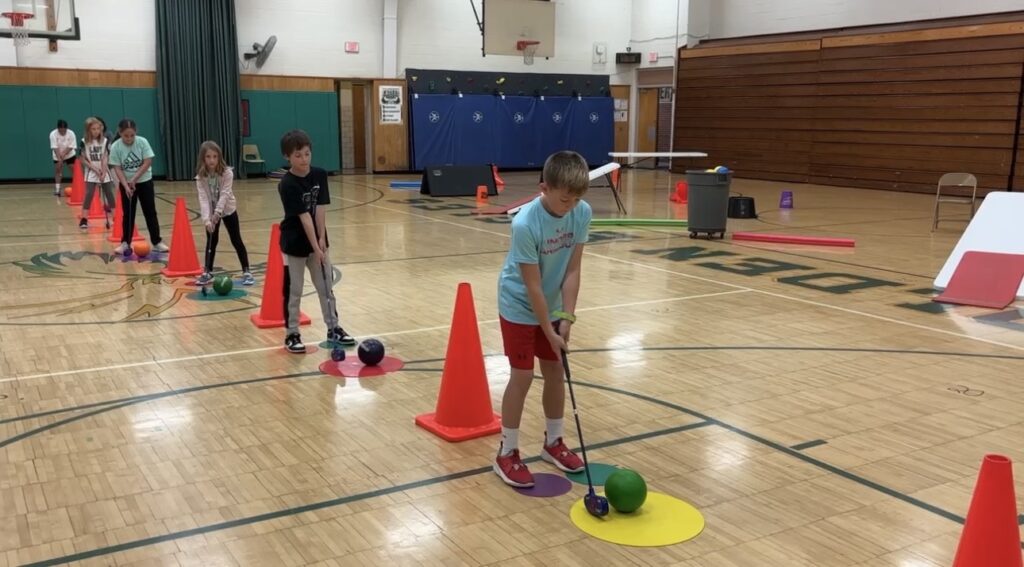
As a member of the First Tee School Program, one of the units that Kent incorporates into his classroom is golf. Throughout this unit, Kent introduces the students to golf in fun and innovative ways, like by creating Topgolf bays or mini golf courses. At the same time, he also introduces them to the life skills that golf can teach. His students learn values like kindness and respect by complimenting each other’s good shots, or the ability to grow through challenge when their shot doesn’t go the way they want it to.
In addition to the physical education, Kent also makes an effort to incorporate additional learning opportunities that go beyond the time his students spend in the classroom. He invited a local author and parent at First Tee – Canton, Tim Satava, to present at a reading night held at the school. Tim read his book, “You and Me Are on the Tee,” to the students in attendance and then answered any questions they had about both golf and reading. After that, the students had the opportunity to set up a mini golf course in the gym and compete against one another.
With all of Kent’s innovation, it is no surprise that he’s earned recognition, like being named a Community Playmaker by the Cleveland Cavaliers.
In the future, Kent hopes to continue to spread learning and joy through physical education and golf, both for the students in his schools and also for the community he has built on social media.
“The school program is so important to give all students the opportunity to be introduced to golf,” Kent said. “There is so much joy in the game of golf.”
Click here to learn more about the First Tee School Program or to get involved at your school.
For Skyler Xue, an Ace participant at First Tee – Greater Washington DC, taking part in the First Tee Leadership Series in partnership with PGA TOUR Superstore was nothing short of life changing. As a high school junior uncertain about what lay ahead, he found clarity and confidence through the experience, he said.
The five-week workshop, which is held at PGA TOUR Superstore locations across the country, helped him explore his strengths and values, while envisioning a career that blends his passions for golf and STEM. “The staff at PGA TOUR Superstore shared their insights on leadership and resilience, which had a lasting impact on me,” he said.
For Skyler, one of the most impactful sessions focused on goal setting and career planning. Learning how to apply the SMART goals framework helped him map out actionable steps toward his dream of working in sports analytics.
S: Specific M: Measurable A: Achievable R: Relevant T: Time bound
Skyler aspires to use data to help athletes and coaches optimize performance. With a strong foundation in STEM and experience in data science and computational modeling, he’s already developing an AI-powered golf caddie that analyzes course maps and player data to recommend the best shot strategy.
This project is a perfect example of his passion for applying analytical thinking to solve practical problems.
Skyler is now heading home from Montana, where he attended the First Tee Leadership Summit in partnership with PGA TOUR Superstore. The weeklong retreat builds on the skills taught during the in-store Leadership Series.
Participants are encouraged to build confidence and grow through challenge as they try new things, like horseback riding, whitewater rafting and archery.
Accumulating nearly 200 community service hours in 2024, Skyler is a junior coach at First Tee – Greater Washington DC, founder of his school’s math club and a member of the golf team. There’s no doubt the lessons he learned in Montana will be put to good use by this future leader.
Learn more about First Tee’s teen participant events, and join PGA TOUR Superstore in supporting participants like Skylar by donating today.
Now in its fifth year, the First Tee National Championship returns this week to the University of Notre Dame. It’s an opportunity for top players from across the country to showcase the skills they developed at their chapters.
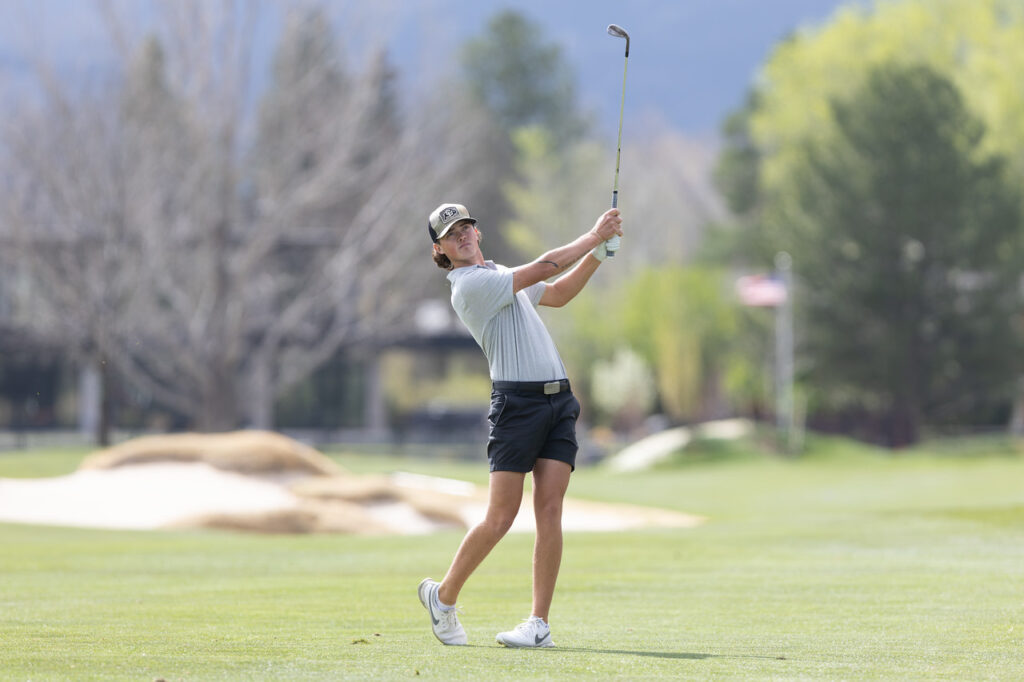
All eight past champions are currently on college golf rosters, including First Tee – Green Valley Ranch alumnus Hunter Swanson, who plays at the University of Colorado, Boulder. While playing collegiate golf can be a rewarding experience, the process of getting there can be demanding.
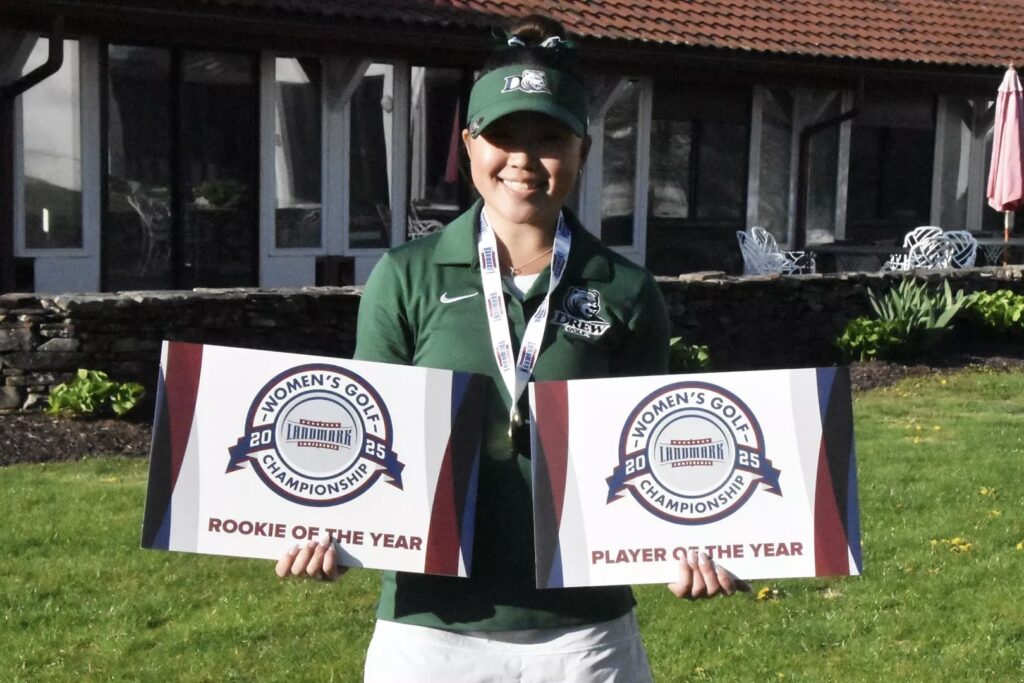
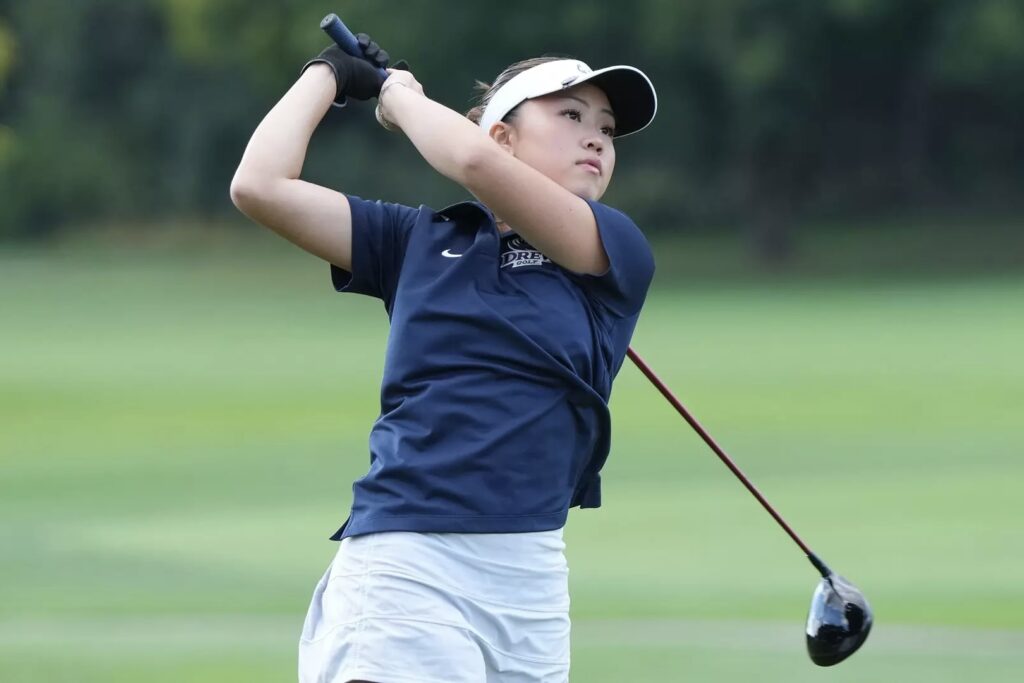
First Tee – Greater Washington DC alumna Joey Nguyen is a member of the team at Drew University in Madison, New Jersey, where she was named Women’s Golfer of the Year by the Landmark Conference last season. First Tee – West Virginia alumnus Argyle Downes is a First Tee Scholar who’s heading into his sophomore season at Rutgers University.
As former First Tee National Championship competitors, we asked Joey, Argyle and Hunter about their journeys from First Tee to college golf.
When did you start thinking about college golf?
Joey started reaching out to coaches in 8th grade, sending introductory emails to get on their radar. She wasn’t sure which NCAA Division would be the right fit — but she knew it was important to get her name out as a potential recruit.
Meanwhile, Argyle got serious about college golf after his freshman year of high school, when his confidence caught up with his ambition. “I always had a goal but until that time I didn’t really have true self belief,” he said.
Key takeaway: While there’s not a specific recruiting timeline you need to follow, start early if you can, and know that belief in your own potential is just as important as raw skill. As you navigate the recruitment process, remember to set goals that are positive, specific and under your control.
How important are academics?
Both players emphasized the importance of grades in the recruiting process. “There are so many successful players that grades often become a deciding factor whether a player will be part of the team or not,” Argyle said, noting that the razor thin margin between recruits sometimes leaves coaches looking for reasons to leave a player off the roster.
Joey noted that grades and test scores are also critical for academically selective schools, opening doors that golf scores can’t.
Key takeaway: Strong academics can show good judgment, which is important to college golf coaches.
What’s your advice for connecting with coaches?
For Hunter, a busy competition schedule helped him get his name in front of coaches. “I played as many of the top junior golf tournaments as I could, not only to play against the best junior golfers, but knowing that college golf coaches would be watching the scores,” Hunter said.
When it comes to outreach, Joey used a combination of emails, phone calls and texts to build relationships with coaches. Hunter said social media is also an important recruitment tool.
When you do exchange messages with coaches, it’s important they come from players, not parents. Joey recommends starting with a concise intro email that includes:
Name, school and grad year
Tournament schedule
Key stats and highlights
Once the conversation starts, it’s important to send updates, results and anything else that keeps you on their radar. “If a coach doesn’t respond, that doesn’t mean you stop emailing. Be persistent,” she said.
When coaches do reach out, you can expect them to ask a wide variety of questions:
What are your academic and athletic goals?
What do you want in a team, school and coach?
What’s your practice routine and tournament schedule?
What are your strengths and weaknesses — on and off the course?
Key takeaway: Coaches may not find you unless you help them, and while it can be intimidating, try to show your personality, not just your golf skills. Showing that you can work well with others and respect differing opinions indicates you’re likely to be a good teammate.
What were the biggest surprises during your freshman year?
A campus visit helped Joey decide on Drew University. “I could see myself living there and really enjoying the courses and practice facilities we have,” she said. “I considered what was important to me and what I wanted to get out of my college experience, and that also helped me decide.”
But she faced a challenge before the start of the season, when the coach who recruited her left for another school. “That was definitely tough,” she said.
Hunter also had to be flexible throughout the process as he wasn’t able to go on recruiting visits during the COVID-19 pandemic. Ultimately, he decided on Colorado because he felt like he could contribute to the team, grow as a player and student and trust the coaching staff, he said.
For Argyle, the biggest surprise has been just how busy life is for student athletes. “From 6 a.m. until bedtime, it’s honestly just a fully packed day with practice, recovery and school responsibilities,” he said. “There may be a few small breaks but it’s a very busy and demanding schedule.”
Key takeaway: It’s important for collegiate golfers to be flexible and prepared for change. While you’re likely to face challenges during your college golf career, it’s important to consider what you can learn from them.
Any final words of advice?
During periods when you’re playing well, play in as many tournaments as you can to boost your scoring average and showcase your skills, Joey recommends. And keep in close contact with coaches: “Send updates frequently about how you are playing, what you are working on or anything you would like to share,” she said. “It never hurts to show you are interested or really want to play at their school.”
“My best piece of advice for juniors hoping to play in college is to honestly love working hard and love the sacrifices you have to make to succeed,” Argyle said. “I may not have been the most talented or successful junior golfer, but I really love the sport and love playing and competing, and without that I wouldn’t be in the position I’m in today.”
And Hunter recommends enjoying the journey as much as possible. “This is something that a lot of kids in this world do not get the opportunity to experience, and it is a process that could change the life of someone forever,” he said. “Enjoy the process, don’t put too much pressure on yourself to perform and understand that things will work out how they are supposed to with hard work, dedication and having fun.”
The First Tee National Championship is part of our full slate of national participant opportunities, which are designed to keep teens engaged with the program. In addition to competitive golf opportunities, we offer leadership programs, a girls empowerment event and a community service workshop.
More than nine in 10 parents with adult children aged 18-35 say they’ve seen how youth sports can shape a child’s future
PONTE VEDRA BEACH, Fla. (May 8, 2025) – Despite an unsteady economy, nearly nine in 10 American parents say they are making room in the budget for extracurricular activities (88%), including sports. Nine in 10 parents say playing sports helps children build character (92%) and teaches them important life skills (90%), according to new research from The Harris Poll and First Tee.
The global consulting and market research firm teamed up with the nonprofit youth development organization to explore the value parents place on youth sports, with a particular focus on the long-term impact of coaches. The Harris Poll surveyed 2,042 U.S. adults in March 2025 and analyzed the data by gender, age, race, education and income, among other characteristics.
While few young athletes ultimately turn professional, parents believe youth sports can have lifelong benefits off the field. Nearly nine in 10 parents strongly recommend youth sports to other parents, believing that coaches can impact a child’s ability to work well with others (89%), respect others (89%) and be resilient in the face of challenges (88%).
“According to this new research, parents with adult children say the confidence their child built through sports continues to shape their success today, a data point that reinforces First Tee’s mission of teaching not only golf skills but also life skills and values that equip kids to face new challenges,” said First Tee CEO Greg McLaughlin. “While we have heard success stories from countless First Tee alumni, we are grateful to Harris Poll for helping us quantify the incredible impact of extracurricular activities.”
Generations of Americans have been shaped by youth sports, with nearly 70% of parents who grew up with coaches saying they wouldn’t be where they are today without those influential adults in their life (67%). First Tee knows its coaches are the key to its success, which is why it’s celebrating them during First Tee Week, May 19-25. The new brand awareness campaign will mark the launch of a PSA titled “Dear Coach” and feature a panel discussion on the impact of coaches at the PGA TOUR’s Charles Schwab Challenge.
Other key findings from the survey include:
69% of parents believe there aren’t enough female coaches or mentors in youth sports. That number increases to 74% among parents of color. While parents see the impact of coaches, they believe coaching is significantly more accessible to boys than girls.
92% of parents believe that playing sports helps kids build character. That number jumps to 97% when surveying parents whose children are currently enrolled in sports. Parents see improved mental health and exposure to new things as additional benefits of extracurricular activities.
More than half of parents say trustworthy coaches could increase their child’s chances of committing to an activity (51%). Parents cite positive role modeling as their top priority when assessing a coach, followed by skill development and motivation and encouragement. All First Tee coaches are trained and background checked, so they’re prepared to teach golf skills and life lessons that extend beyond the course.
“Even amid economic uncertainty, parents see youth sports as a non-negotiable investment in their child’s future,” said Abbey Lunney, Managing Director of the Trends and Thought Leadership Practice at The Harris Poll. “Nearly 9 in 10 say the experience helped prepare their children for the future. Our data shows they’re not just hoping for athletic success—they’re prioritizing confidence, resilience, and lifelong skills shaped by meaningful coaching.”
This is the third annual research collaboration between The Harris Poll and First Tee.