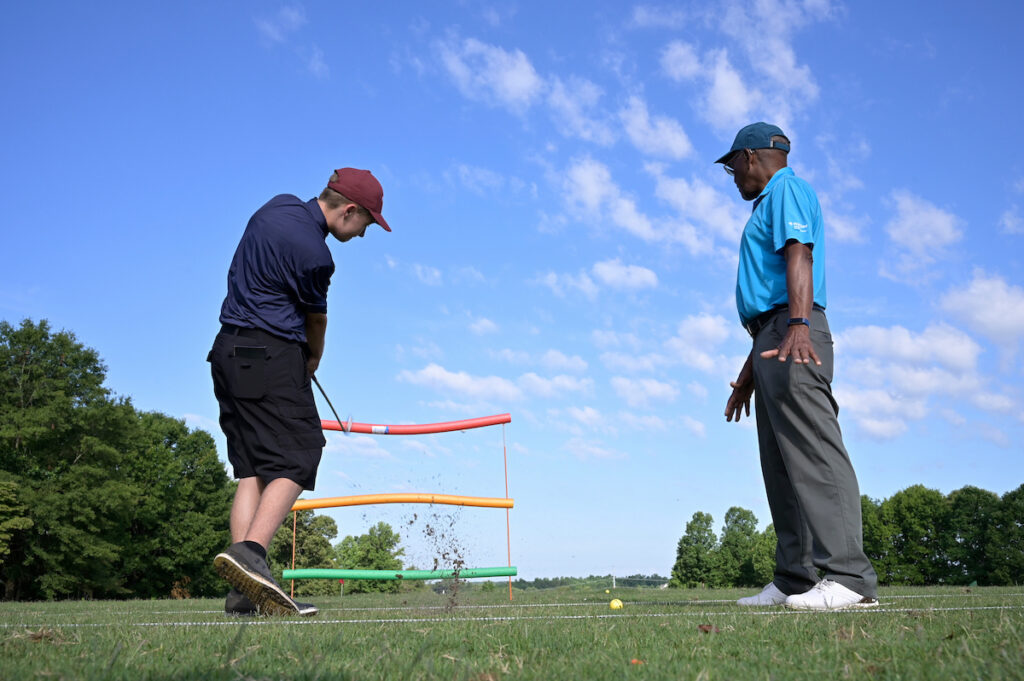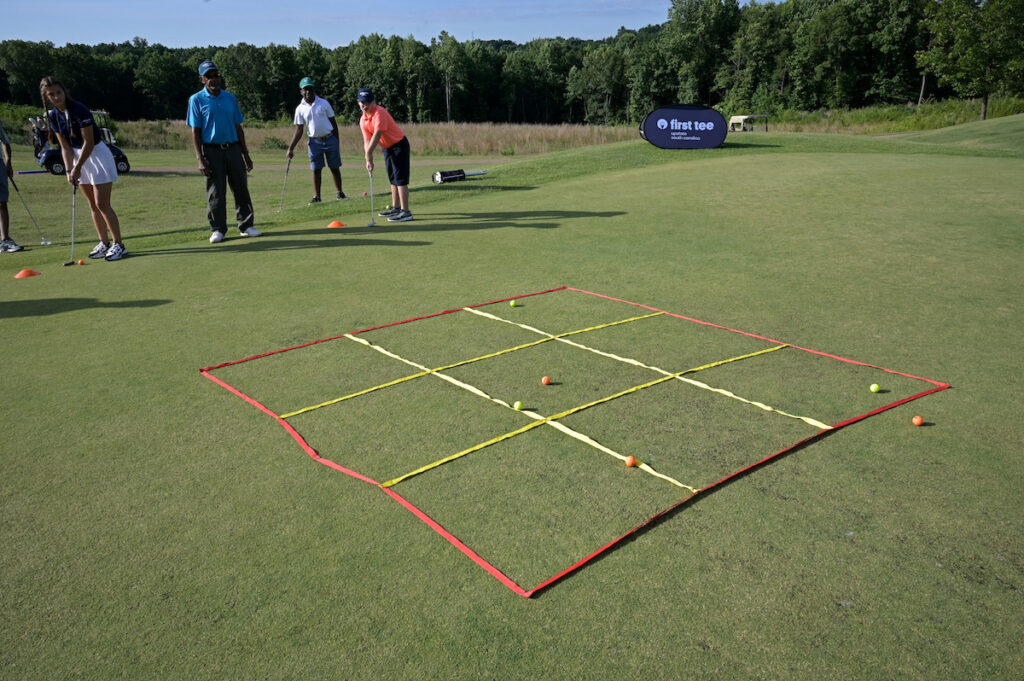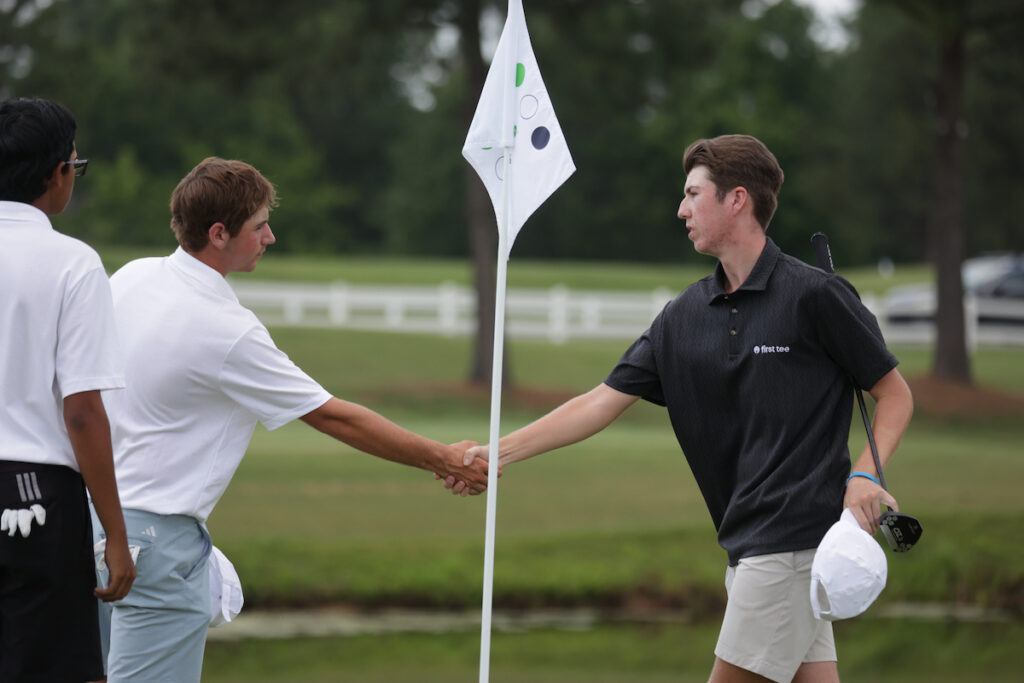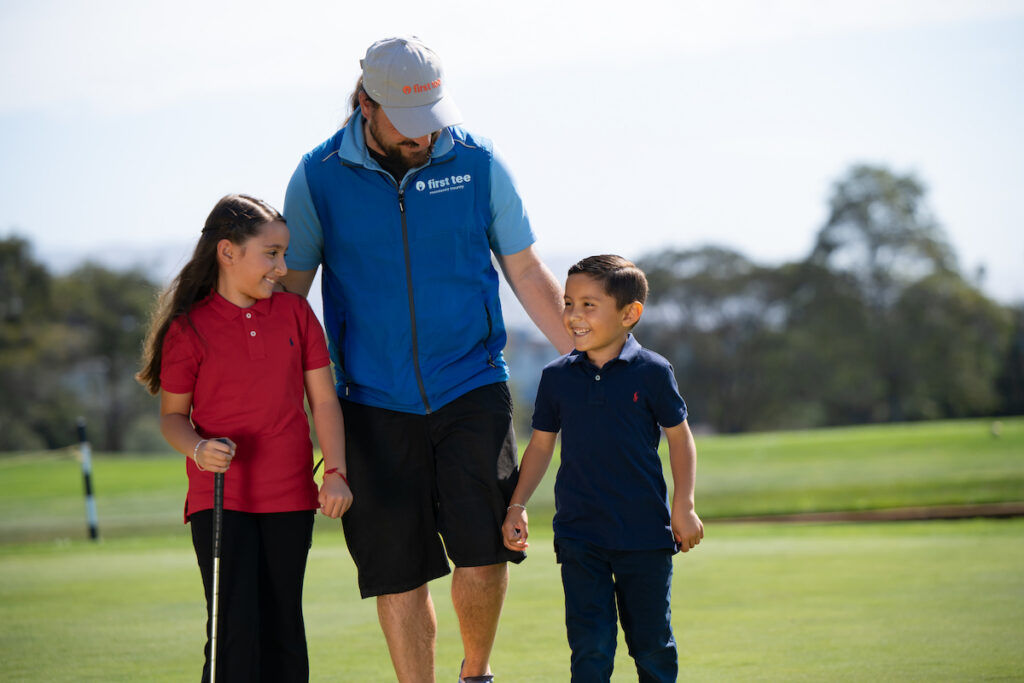
Here’s why mentorship matters for kids 

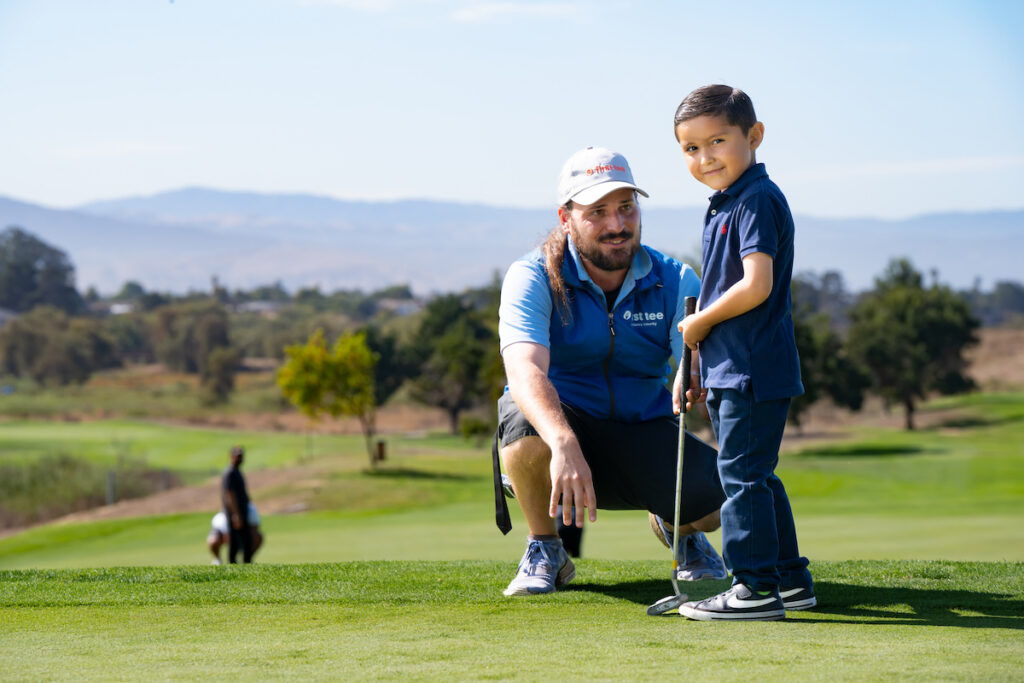
First Tee coaches feel proud when a new player launches a drive or sinks a putt for the first time. But the true magic of our program happens off the course when a participant overcomes a tough obstacle at school or when an alumnus achieves a big goal. 

Those moments highlight how much mentorship matters. 

A landmark 30-year study by Big Brothers Big Sisters of America found that young adults with mentors earned 20% more than their peers. The same research determined that mentorship is one of the most cost-effective youth development interventions available.  

Drawing on results from over 70 program evaluations, MENTOR: The National Mentoring Partnership has found that mentoring supports improved grades, test scores and educational attainment, while also improving classroom behavior and school attendance. 

But accessible mentors aren’t always easy to find 

For all of mentorship’s documented benefits, access to mentors isn’t equal — and the gap is widening. 

2024 report by MENTOR found that today’s 18–21-year-olds are 9% less likely to have had a mentor growing up compared to the Millennial generation. More than one in three young adults say they grew up without the support of any mentor at all.  

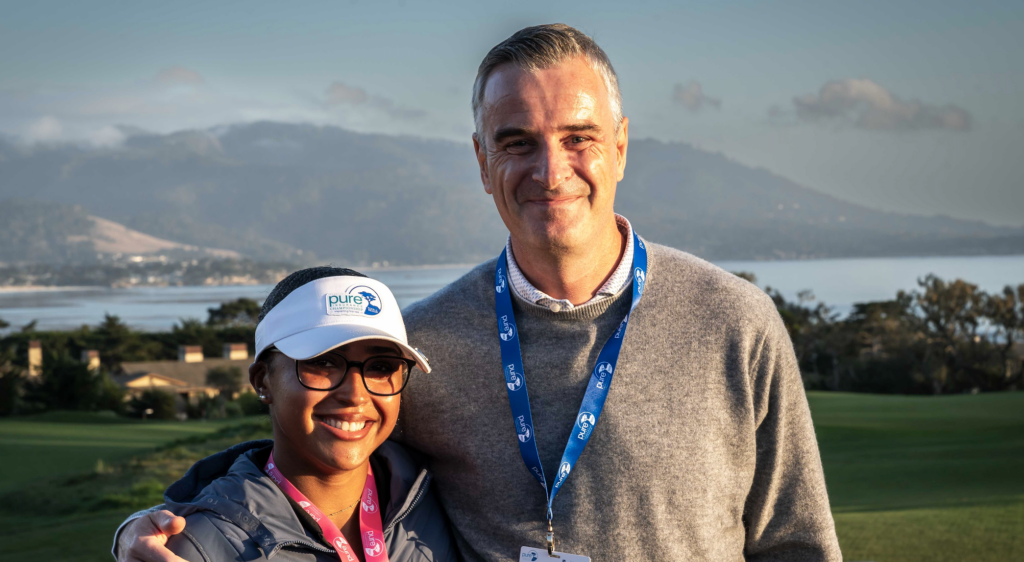
The research is clear that mentoring relationships promote a strong sense of belonging, an asset that’s essential for healthy youth development. For the young people who most need a caring adult in their corner, that connection is often unavailable. It’s a gap that programs like First Tee are uniquely equipped to fill. 

More than a game 

According to research from First Tee and The Harris Poll, 88% of parents with coached children say their child has become more likely to speak up for themselves in other areas of life since participating in coached sports. An even larger majority — 94% — believe sports help children grow their confidence and social skills.   

First Tee coaches teach participants how to introduce themselves to playing partners, and participants learn the A-L-R method for engaging in conversation: 

A: Ask questions to learn about someone. 
L: Listen to their response. Make sure you’re listening to understand rather than thinking of what to say next. 
R: Reflect and respond thoughtfully with a follow up question or by sharing your own thoughts or feelings on the topic. 

The impact of coaching lasts well into adulthood. Among parents who had coaches in their own youth, 67% say they wouldn’t be where they are today without those adults. They credit their coaches with teaching them to collaborate, lead and overcome challenges. 

Most First Tee coaches are not golf professionals and that’s OK – not every First Tee participant aspires to play competitive golf, but we ask our coaches to lead by example as great listeners, cheerleaders and positive role models for the next generation. 

Support First Tee’s efforts to provide quality mentors for our future leaders. Become a Donor Ambassador today. 

How to help shy kids make friends through sports 

Being shy can come with lots of overlooked benefits. Shy people tend to observe carefully before jumping in, which means they can notice details others miss. They’re often good listeners, empathetic and self-aware. 

Still for parents of shy kids, it can be difficult to watch your child struggle to connect with their peers. You want them to experience the joy of friendship, but pushing too hard can backfire. Sports offer a unique environment where shy kids can build friendships at their own pace. In fact, our research with The Harris Poll shows that 94% of parents believe playing sports helps children build confidence and social skills. 

Compared to many team sports, golf provides a more measured environment. There’s time between shots for conversation, opportunities to observe others before acting and a shared focus that takes the pressure off constant eye contact or quick responses. At First Tee, we’ve seen countless shy children blossom as they discover that the golf course is a safe space to practice being themselves. 

But making friends doesn’t happen automatically. Even in the most welcoming environment, shy kids might benefit from a little coaching on how to connect. 

Facilitating connections with A-L-R 

At First Tee, we teach a simple framework that can transform how shy kids approach new friendships: Ask, Listen, Respond

Ask questions: Encourage your child to become curious about others. Asking questions isn’t about filling awkward silence but about discovering who someone really is. Help your child understand that questions about a person’s background, experiences or interests can reveal commonalities they never expected. 

Listen to understand: Many shy kids are already good listeners by nature, but in social situations, they may be preoccupied by worrying about how to respond. Introduce the concept of active listening: focusing genuinely on what the other person is saying because you’re interested, not because you’re preparing your reply. 

You can practice this at home during dinner conversations or car rides. When your child shares something, model active listening by giving them your full attention, asking follow-up questions and reflecting back what you heard. Then gently encourage them to do the same when others are speaking. 

Reflect and respond: The final piece is showing others that you were truly listening. Teach your child that responding doesn’t mean having the perfect comeback or the funniest joke. It means acknowledging what was shared and building on it. 

A simple, “That sounds really cool. What was your favorite part?” or “I’ve felt that way too,” can be enough to keep a conversation flowing and signal genuine interest.  

The beauty of First Tee is that it provides natural, repeated opportunities to practice these skills. As a parent, you can support this process by encouraging participation in group activities, celebrating small wins and being patient; some friendships develop quickly, while others take a full season to form. 

Learning to ask thoughtful questions, listen actively and respond with authenticity can help prepare your child for success in school, future careers and all of life’s relationships. At First Tee, we’re committed to creating an environment where every child can discover their potential both on and off the course, because golf isn’t just about the game; it’s about the friendships formed, the confidence built and the life skills that last forever. 

Board Member Spotlight: Janeen Driscoll

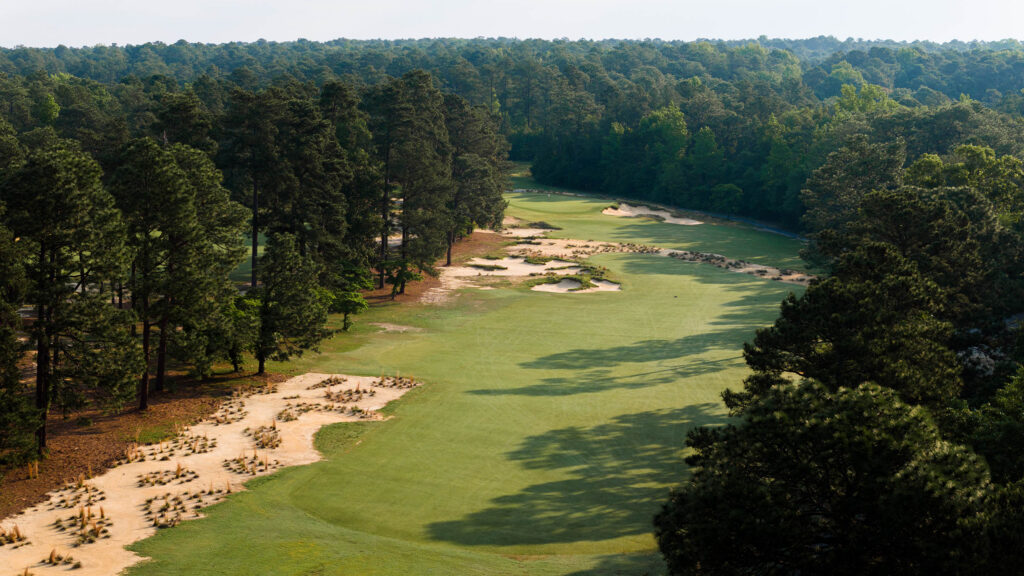
Janeen Driscoll during the first round of the 2023 U.S. Adaptive Open at Pinehurst Resort & C.C. (Course No. 6) in Village of Pinehurst, N.C. on Monday, July 10, 2023. (Robert Beck/USGA)

Born and raised in Pittsburgh, Janeen Driscoll’s heart bleeds black and gold. The blue-collar, friendly town significantly shaped her work ethic, what she values most, and the premium she places on people and relationships. While her school bus passed a small par-3 course every day growing up, golf held an unapproachable mystique to her. Now, she is passionate about having affordable, accessible golf in small communities. Janeen said that golf “teaches life skills, values, and integrity, and you meet extraordinary humans through it”.

Janeen has had multiple points in her career bring her to the Pinehurst area. From working at Pinehurst Resort and opening Golf House Pinehurst for the USGA, the community has become her family’s forever home. The 2014 U.S. Open at Pinehurst, her first working for the USGA, was Janeen’s first interaction with First Tee. The USGA was a founding partner of First Tee, and she wanted to learn more about their impact at a local level. Learning more about First Tee and how the youth in the community benefit led her to pursue a more active role. Passionate about the First Tee mission of building character among our communities youth, Janeen describes becoming a board member “a pretty easy choice”.

Janeen’s favorite memory with First Tee – Sandhills “was a summer STEM camp at Pinehurst in 2024, when we used the U.S. Open course to teach kids about how the course was maintained.  I’m a huge fan of sustainable courses, and know the kids had a lot of fun using moisture meters, designing golf holes and planting native plants.  They all appreciated where they play after that day, and the people that provide those terrific playing surfaces.  Memory of a lifetime.

Volunteer Coach Spotlight: Aubrey Proud

Born in Wallingford, PA, near Philadelphia, Aubrey Proud was introduced to golf when his grandfather gave him his first set of golf clubs when he was 8 years old. He was involved in many sports growing up, including golf, soccer, and baseball, but after several knee injuries in high school, he focused solely on golf. During his time at Davidson College, he was a four-year team member and co-captain on the golf team. After graduation, he continued playing recreationally and from 1997-2002 had the good fortune to work as Tournament Manager and then Tournament Director for the World Junior Golf Cup. This junior golf tournament series included leading a U.S. team of 15 juniors against a Canadian team of top juniors in a Ryder Cup style competition in St. Andrews each summer. Learning many life lessons through golf, he now enjoys being a part of many golf memories with his family.

In July 2024, his family of 5 moved to West End because of the opportunities for their daughter to pursue her equestrian interests and sons to pursue their golf interests. After settling into the community here in the Sandhills, he heard a lot about First Tee – Sandhills through his childrens school and community outreach. Shortly after Aubrey attended a First Tee Volunteer class and started to volunteer at Seven Lakes Golf Club in April 2025. His favorite memory as a coach has been “during a putting game to collect the most toys/stuffed animals, it was great to see the teams of two kids working together as friends cheering each other on while showing their improved skills.”

Participant Spotlight: Meet Isabella!

Throughout her involvement with First Tee – Sandhills over the past few years, Isabella truly embraces the program and participates with confidence and enthusiasm. Each week, she arrives excited, engaged, and ready to learn, consistently showing good judgment and respectful behaviors.

Isabella participates collaboratively with her peers, encouraging others and helping create a positive learning environment. She responds thoughtfully during life skills discussions and works hard each week to improve her golf fundamentals while setting and working toward personal goals.

With her positive attitude, leadership, and joyful spirit, Isabella is a joy to have in every class and a wonderful example of what it means to grow through the game of golf.

-Coach Shelby

How golf prepares kids to overcome challenges 

Every golf parent has watched it happen. Your child lines up a putt, swings with confidence and misses. Maybe their shoulders drop. Maybe there’s a frustrated sigh. And in that moment, you might wonder: Is this good for them? 

At First Tee, we’d say yes. 

Golf is one of the few sports that puts a young person face-to-face with failure on almost every hole, and that’s exactly what makes it such a powerful teacher. When kids learn to navigate a missed shot, a bad round or a score that didn’t reflect their effort, they’re building something far more important than their game. They’re building resilience. 

The scorecard doesn’t lie, and golf’s honesty can be uncomfortable at first. But over time, it teaches kids to take ownership of their performance — a life skill that carries far beyond the course. 

At First Tee, our coaches create a safe space where that accountability feels empowering, not defeating. Young people learn that a bad shot isn’t a reflection of who they are. It’s information. It’s an opportunity to adjust, refocus and try again. 

What bouncing back looks like 

Resilience isn’t about pretending failure doesn’t hurt. It’s about developing the tools to move through it. At First Tee, we view failure as a “First Attempt ILearning,” recognizing there’s always a lesson to be gleaned when things don’t go right. 

In First Tee’s curriculum, participants work on skills like emotional regulation, positive self-talk and setting goals, which all come naturally on the course. When a young person learns to take a breath after a bad hole and approach the next tee box with a fresh mindset, they’re practicing exactly the kind of response that will serve them in a tough exam, a difficult friendship or a challenging moment at work someday. 

That kind of reflection doesn’t happen by accident. It happens because coaches are asking the right questions, creating space for young people to process their experiences and grow from them. 

“We’ve watched Blayze transition from reacting to challenges to strategically managing them,” said Landon and Holly Chapman, parents of First Tee – Indiana participant, Blayze Chapman. “By applying the STAR (Stop, Think, Anticipate, Respond) model, he’s replaced frustration with perseverance and judgment. Whether he’s navigating a double-bogey or a heavy academic week, he no longer lets a single moment define his day. He’s learned to ‘reset’ with a level of composure that most adults struggle to maintain, proving that his character is anchored in something much deeper than a scorecard.” 

The role parents play in the process 

Here’s something we hear from families all the time: The lessons don’t stay on the course. While First Tee programming is typically delivered in golf settings, the goal is for parents to see their children handling frustration differently at home, in school and in other activities Our aim is for participants to grow in patience and become more articulate about their feelings. 

Of course, parents play a big role in that. When your child comes home after a tough round, how you respond matters. Instead of jumping to fix the problem or minimize their frustration, try asking open-ended questions: What was the hardest part today? What would you do differently next time? What’s one thing you’re proud of, even if the score wasn’t what you hoped? 

These conversations reinforce what your child is learning at First Tee and help them internalize the idea that struggle is a normal, even necessary, part of growth. 

“Golf has given Blayze a quiet, internal confidence rooted in responsibility and integrity,” said the Chapmans. “Through First Tee, he’s developed the social dexterity to engage with mentors and the self-assurance to lead his peers.” 

To support First Tee and its efforts to teach life skills and values through golf, consider becoming a Donor Ambassador today! 

Izzy Kornmeyer shares the transformative power of golf 

Izzy Kornmeyer didn’t know how to hold a golf club when she started at First Tee – Indiana in 8th grade. Now, as a high school senior and varsity golfer, she can’t stop thinking about the game that has completely changed her life. 

“Golf has changed me for the better, and I am forever grateful for it,” she said. 

Izzy’s golf journey started with Sunday mornings watching her dad and grandpa head out to play. When she decided to try high school golf, her mom signed her up for First Tee, hoping the program would give her daughter the foundation she needed. 

That first tournament was humbling. After top-slicing her opening drive, Izzy shot 110. But instead of giving up, she leaned into the challenge. Several summer tournaments and countless practice sessions later, she returned to that same course and shot 83, proving what dedication and perseverance could accomplish. 

Now Izzy is preparing to play collegiate golf at St. Thomas University in Miami, where she’ll be a first-generation college student. 

Finding her voice 

The transformation wasn’t just about golf scores. Izzy arrived at First Tee as a quiet, uncertain beginner who felt out of her element. Over four years, she evolved into a confident mentor and leader who now helps launch new First Tee – Indiana initiatives through the Leaders In Training Program. 

Her leadership extends far beyond the golf course. Izzy serves on First Tee – Indiana’s Participant Advisory Council and was chosen as a Youth Deacon at Second Presbyterian Church.  

Izzy’s approach to leadership is guided by her faith and the values she’s developed through First Tee. She lives by Matthew 20:26: “Whoever wants to become great among you must be your servant.” 

“I now understand that true leadership isn’t about being in control,” Izzy said. “It’s about being present, expressing kindness and prioritizing other people before yourself.” 

Whether she’s volunteering in the church nursery, creating encouraging TikTok content or being the first to help others at First Tee – Indiana, Izzy leads with kindness and compassion. 

Making an impact 

When she’s not competing, Izzy is often watching professional golf, practicing and or giving back to others. In 2024, she attended the First Tee Innovators Forum in Phoenix. During the event, participants plan service projects they execute in their communities. Izzy ultimately collected 700 full-sized hygiene products and $500 for the Julian Center, Indiana’s largest organization supporting victims of domestic violence, sexual assault and other crises. 

Her journey from a nervous beginner who couldn’t grip a club to a confident leader who helps others find their own path proves what First Tee has always known: With the right support, young people can achieve remarkable growth. 

For Izzy, that growth has been about more than improving her golf game. It’s been about discovering her voice and leading with kindness – one shot, one challenge and one act of service at a time. 

Coach Shayna: First Tee coaches are ‘building the future of the game and the character of the kids who will carry it forward’

Some people find golf. Golf found Coach Shayna before she could even see over the top of the flagstick. Growing up in Unionville, Missouri, Shayna was just 3 when her grandparents cut down a putter and packed her into their three-wheel Harley-Davidson golf cart, heading to their nine-hole course with sand greens.

“My grandparents were intentional about teaching me the game the right way,” she said. “They made sure I understood both the mechanics and the integrity behind golf.”

By 11, Coach Shayna was playing on real grass greens for the first time. By 13, she shot a 79 at the Timber Ridge Junior Golf Tournament in Memphis, Missouri — the best score of the day — with her Grandpa Gary, affectionately known as “Schoonie,” walking every hole beside her.

Blazing her own trail

Golf wasn’t always easy to access, especially for a girl growing up in rural America in that era. There were no First Tee programs nearby, no girls’ golf team at her school and no shortage of moments that tested her resolve. When she was excluded from a Father’s Day tournament because organizers believed there should be “no girls,” she didn’t walk away from the game. She found another way in.

Shayna earned a spot on her high school boys’ varsity golf team — and held her own in the top five all four years, competing weekly for the number one position. Golf was just one chapter in a standout athletic career that earned her 16 varsity letters across golf, softball, basketball and track. Her softball team was later inducted into the Missouri State Hall of Fame.

Finding her way back to golf

Coach Shayna stuck with softball through college, where she earned a degree in psychology before becoming a cosmetologist. Golf took a backseat as she moved to Florida and became a mom of five, but the love of the game never left.

“For years, I mostly daydreamed about it and occasionally hit balls in the yard,” she said. “But the desire to compete and be part of the golf community never left me.”

When Shayna began working with Dixon Golf, a tournament consulting company, the golf world started pulling her back in. The more she played, the more one organization kept coming to mind: First Tee.

“I knew firsthand how transformative starting young in golf could be,” she said.

About three years ago, she met First Tee – Gulf Coast executive director Marty Stanovich and signed on as a volunteer. In the fall of 2025, she achieved her goal of becoming head coach at Fort Walton Beach Golf Club.

The joy of coaching

Coach Shayna’s background is uniquely suited for the work. Her degree in developmental psychology, combined with raising five kids of her own, gives her a nuanced lens when working with young people.

“I know they are constantly growing,” she said. “They are resilient, perceptive and capable of more than they realize.”

With support from First Tee partner, Morgan Stanley, Coach Shayna recently reached another milestone – she attended First Tee’s Level 2 coach training in Tampa, where she learned more about the youth development organization’s Coach Philosophy.

“Being surrounded by others who care deeply about youth development and the game itself was energizing,” she said. “Learning together reinforced that coaching doesn’t have to be done alone.”

A message to future coaches

“My favorite part of coaching is all of it,” Coach Shayna said. “I love showing up, maximizing our time and creating an environment that is both fun and challenging. I see kids as intelligent, capable and full of possibility. My goal is to draw that potential out of them and empower them.”

For anyone on the fence about getting involved with First Tee, her advice is direct: Don’t wait.

It’s rewarding to impact not only children, but the broader community, she said. Almost every class, an older club member stops her or another First Tee coach to thank them for introducing the next generation to the sport they love.

“And that is what First Tee is really about — building the future of the game and the character of the kids who will carry it forward,” she said.

First Tee coaches shape character, build confidence and create supportive environments where every participant feels inspired to grow.

In collaboration with The Harris Poll, our research shows parents believe trained coaches are better equipped to teach new skills, demonstrate a dedication to safety and adapt to the needs of individual children.

Morgan Stanley donates $5,000 for each Eagle recorded at THE PLAYERS Championship to support First Tee’s coach training efforts. Over the last five years, First Tee has been able to send hundreds of coaches to valuable, in-person trainings, where they learn to teach golf and serve as crucial mentors for the next generation.

From the golf course to the spotlight: First Tee participant Cienna Collado brings her passion to TGL

First Tee – Florida Gold Coast participant Cienna Collado aspires to a career in entertainment, and she’s found a unique way to boost her resume that incorporates her love of golf.

Through her First Tee chapter, Cienna earned the opportunity to serve as a ball runner for TGL, professional golf’s newest innovation. Her responsibilities include handing players their golf balls, announcing club selections and retrieving balls after they’re hit. But it’s the unexpected moments that make the experience truly special.

“My most memorable moment was when I was working one of the L.A. matches and Shonda Rhimes was sitting behind me the whole time,” Cienna said. “I was absolutely freaking out because I love her show ‘Scandal.’ After the match I actually got to meet her and she was the sweetest person. It will definitely be a memory I remember for a long time.”

A First Tee journey rooted in values

Cienna’s path to TGL began with her family’s decision to join First Tee. When her private golf instructor joined the organization, her family was drawn to First Tee’s values and mission. “It has come to be one of the best decisions we have ever made,” she said.

Through the program, Cienna has learned lessons that extend far beyond the golf course. “First Tee has taught me the importance of integrity,” she explains. “Especially on the golf course, no one is there to hold you accountable except for yourself. Through golf I’ve learned how much the game is a reflection of life. No one is standing by me all the time to hold me accountable, I have to do that myself.”

Breaking barriers in entertainment

While golf plays a significant role in Cienna’s life, her true passion lies in TV and film production. She’s heavily involved in her school’s production academy, competing at district, state and national levels. In her own time, she creates vlogs, produces and directs content, acts, anchors, reports and even hosts a podcast.

Looking ahead, Cienna has a clear vision for her future: pursuing a career in the entertainment industry while using her platform to inspire the next generation of female golfers.

“There is a severe shortage of female golf representation for young girls to look up to,” she said. “Even if I don’t play on the LPGA Tour, golf is a part of me and my story. I plan to be in a position where I would get to share that story and make an impact on the younger generation of female golfers.”

From the SoFi Center to the golf course and behind the lens, Cienna is well on her way to creating the representation she wishes to see in the world.

Why ‘one and done’ doesn’t work: the science behind how your child learns life skills

By Kristin Westberg – Senior Director, Training & Evaluation

Think about how your child learned to ride a bike. Did they master it after one explanation? Of course not. They practiced over and over, fell down, tried again and eventually, it clicked.

That’s exactly how First Tee’s life skills work, too.

When your child learns about STAR (Stop, Think, Anticipate, Respond) during their first golf session, they’re just getting introduced to the concept. But they’re also focused on their grip, wondering if they’ll make the putt, and probably thinking about what’s for dinner. That first exposure is just the beginning.

The real learning happens through repetition

The magic happens when your child encounters STAR again and again in different situations. Maybe their coach references it after a bad shot: “Remember STAR? Let’s stop for a second. What happened there?” Now they’re connecting it to a real moment of frustration.

Each time First Tee coaches revisit a life skill, they’re helping your child see patterns and build a framework they can access when emotions run high. They’re showing that these aren’t just things “Coach says” but tools they can apply off the golf course.

Take the 4 Rs: Relax, Replay, Ready, Redo. The first time a coach walks your child through this after a mishit, they’re hearing four steps while feeling embarrassed. But by the fifth or tenth time, you’ll start seeing them do it on their own. They’ll take a deep breath, step back, and reset — not because someone explained it perfectly once, but because their coach consistently showed them how.

What the science says

Here’s what research tells us about how kids learn (and what you probably already know from watching your own child):

Kids need to see concepts in multiple contexts before they can transfer them. Their brains are literally building neural pathways that get stronger each time they practice. One exposure creates awareness. Multiple exposures create competence. In fact, learning research suggests people typically need about seven exposures to new information before they can truly retain and apply it, which is why consistent coaching across different situations matters so much.

Developmentally, your child isn’t the same kid they were six months ago. The 8-year-old who needed help thinking through consequences is now 9 and ready to anticipate them more independently. When coaches revisit life skills, they’re meeting your child where they are now.

You might hear your child’s coach reference the same life skill multiple times throughout the season, and that’s intentional. They’re not being redundant; they’re being effective. Here’s how First Tee coaches reinforce learning:

  • Naming it when they see it. When your child demonstrates grit or uses a life skill independently, coaches call it out in the moment.
  • Connecting across contexts. Coaches reference the same life skill in different situations – on the green, on the range, in the classroom and more.
  • Asking reflection questions at the end of each class. “Where else have you used STAR this week?”
  • Modeling it themselves. Coaches let participants see them using these skills when facing their own challenges.
  • Celebrating progress, not perfection. Coaches notice when your child applies a life skill even imperfectly because that’s growth.

Supporting this learning at home

The beauty of First Tee’s approach is that these skills extend far beyond the golf course. When you hear your child mention STAR, the 4 Rs, or FAIL (First Attempt In Learning), you can reinforce what they’re learning:

  • Ask them to explain the skill to you
  • Notice when they use it at home and acknowledge it
  • Reference it yourself during challenging moments
  • Be patient — just like with golf, mastery takes time

The goal isn’t to “cover” a life skill once and check the box. The goal is to help your child internalize these skills so deeply that they become automatic, building something that lasts long after their time on the golf course.

So when you hear the same concepts come up again and again throughout the season, know that it’s all part of the plan. Each conversation, each reminder, each connection is building the foundation for the game changer your child is becoming.

Actor, avid golfer Michael Peña joins First Tee as Brand Ambassador

Peña will support First Tee’s efforts to bring its game-changing golf and life skills curriculum to young people from all backgrounds

PONTE VEDRA BEACH, Fla. (Feb. 20, 2026) – Youth development organization First Tee is proud to announce that actor Michael Peña has joined the organization as a Brand Ambassador. As a longtime golfer, Peña is enthusiastic about bringing the sport and its inherent values to families across the globe. 

Known for roles in films and television series including “Ant-Man,” “A Million Miles Away” and the recent hit series, “All Her Fault,” Peña has been a dedicated supporter of First Tee since 2023, when he first attended the organization’s annual Leadership Summit as a guest speaker. The Summit brings together teen participants from First Tee chapters across the country for leadership development, networking and golf. 

As a Brand Ambassador, Peña will support First Tee’s efforts to reach kids from all communities with programming that uses golf as a vehicle to help young people build inner strength, self-confidence and resilience. Through First Tee’s network of 150 chapters, the organization serves young people ages 5-18 with programs that extend beyond the golf course and into participants’ homes, schools and communities. First Tee also offers robust scholarship and alumni programs

An accomplished golfer himself, Peña regularly competes in pro-am events and has witnessed firsthand how the game can positively impact its players. 

“Golf has been an important part of my life, teaching me patience, discipline and how to handle both success and failure,” Peña said. “I’m honored to become a Brand Ambassador and help First Tee reach even more young people with programs that will help them succeed on the golf course and beyond.” 

“Michael’s genuine passion for golf and his commitment to empowering young people make him an ideal Brand Ambassador as we work to reach more kids with our life-changing programs,” said First Tee CEO Greg McLaughlin. “Michael has inspired teens at our Leadership Summit with his authenticity and his message about the power of perseverance. We are grateful he is taking his valuable time and energy to support First Tee.”  

First Tee reaches more than 3 million young people annually through programming at chapters, schools and community centers. Peña joins three existing First Tee Brand Ambassadors: Actress and First Tee alumna Kathryn Newton and PGA TOUR players Alex Smalley and Austin Smotherman, who is also a First Tee alumnus. 

Encouraging every player to shine: How First Tee addresses gaps in golf skills  

If you’ve ever worried about signing your child up for a new activity because they might be “behind” other kids, you’re not alone. It’s a common concern among parents, and one we hear when families are considering First Tee programs. 

Here’s what we want you to know: At First Tee, we’ve designed our approach so that every participant can learn, grow and have fun, regardless of where they start. 

We’ve found kids and teens genuinely enjoy being around their peers. That’s why most First Tee Chapters offer age-based programming, rather than grouping kids by skill level. This allows players to connect, laugh and learn from each other in ways that transcend golf skills. 

“First Tee coaches intentionally create optimal learning environments for participant success — fostering friendship, golf skill development and fun on the course,” said Lauren Kyaw, manager of First Tee’s coach program. “Through coaching strategies and coachable moments, coaches meet participants where they are and guide them toward mastery.” 

But we also know that a 10-year-old who’s never held a golf club has different needs than a 10-year-old who plays regularly. That’s why our coaches take a thoughtful, individualized approach within each class. 

How we make it work 

At the start of each session, our coaches determine where each participant stands with their golf skills, not through an assessment but by observing their performance in fun games and drills. This isn’t about labeling anyone or creating pressure but about understanding how we can best support each player’s journey. 

From there, we use several strategies to ensure everyone is appropriately challenged and engaged: 

Personal Par is one of our favorite concepts. Instead of holding everyone to the same standard, we encourage each player to set their own goals for activities. A beginner might aim to make contact with the ball three times in a row, while a more advanced player might work on hitting a specific target. Both students are working hard, both are achieving something meaningful and both are experiencing success. 

Flexible grouping means that while the class stays together as a unit, we’ll group players by skill level when introducing more complex techniques. At the same time, we intentionally pair advanced players with beginners during team challenges. This builds camaraderie across skill levels and allows everyone to contribute their strengths. 

Optimal challenge ensures that activities cater to multiple skill levels. Every student faces appropriate challenges … not too easy, not too frustrating, but just right for where they are in their development. 

The power of peer mentorship 

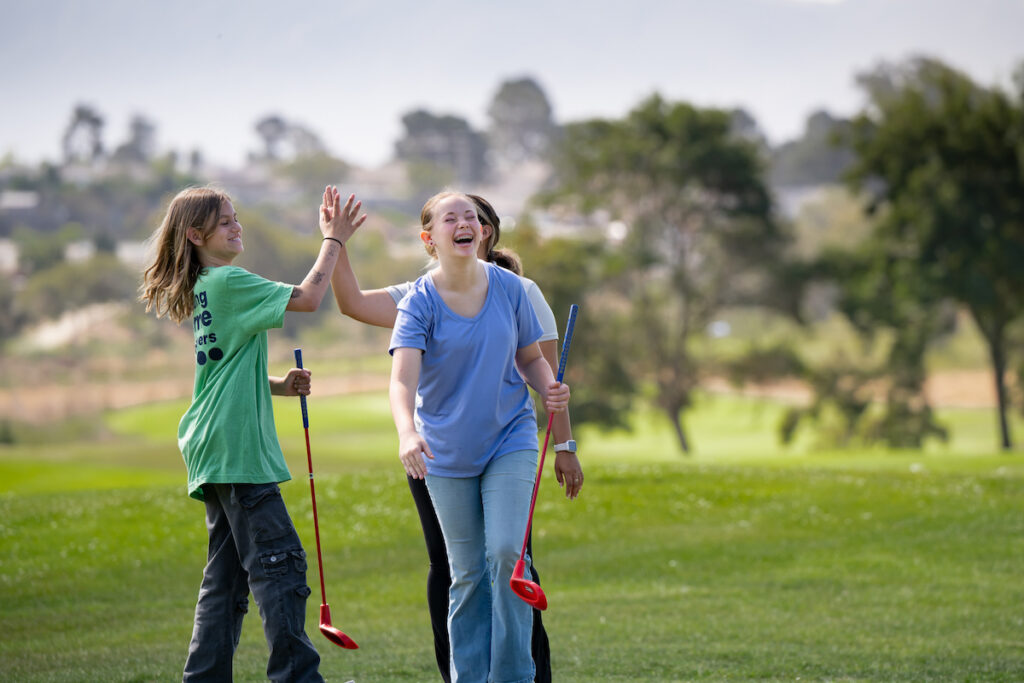
Here’s something special that happens when you mix skill levels: advanced players become natural leaders and mentors. We’ve seen countless students light up when given the opportunity to help a classmate or demonstrate a skill. This doesn’t just reinforce their own learning, it builds confidence, empathy and leadership abilities that extend far beyond the golf course. 

Many chapters also offer teen activities where golf isn’t the focus. From opportunities to build leadership skills, like teen advisory boards, to social events, like movie nights, bowling and other outings, these activities allow players of all skill levels to interact and build friendships off the course. 

Coaching that adapts to each student 

Our coaches understand that feedback isn’t one-size-fits-all. A student who’s just starting out might need encouragement and simple adjustments, while a more experienced player might benefit from more technical guidance. Our coaches modify their feedback to fit each player’s needs and learning style, ensuring that everyone receives the support that will help them improve. 

Your child doesn’t need to know anything about golf to thrive in a First Tee program. They don’t need to be naturally athletic or have prior experience. They just need to show up ready to try, to learn and to be part of a community that values growth over perfection. 

“Regardless of participants’ golf skill level, coaches bridge activities back to everyday life, helping youth overcome challenges, set goals and deal with adversity,” Kyaw said. “This ties back to First Tee’s mission and purpose: empowering participants to build character and instill life-enhancing values through golf, values they will carry far beyond the course.” 

Learn more about supporting First Tee.